
The Baritone
The Voice Between Tenor and Bass
What is the Baritone?
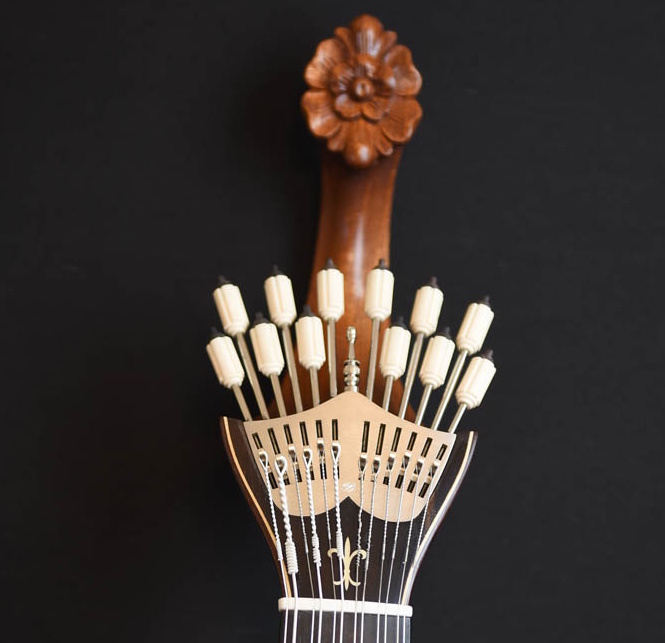
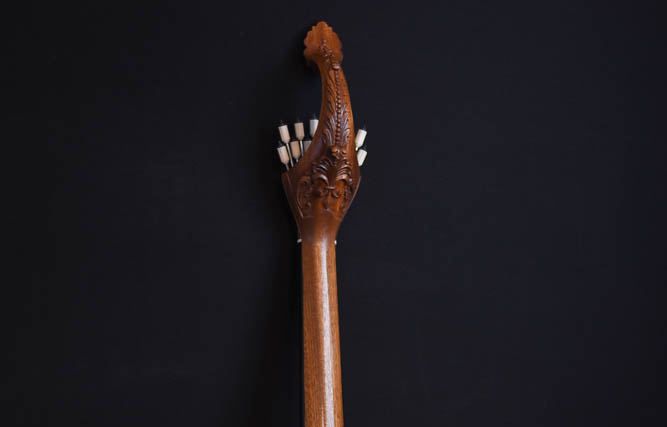
The Baritone is a Portuguese plucked string musical instrument, derived from the traditional Portuguese guitar but with larger dimensions and a deeper, more resonant sound. Created in the late 20th century, the Baritone was envisioned by the musician Carlos Paredes and developed with the help of luthier Gilberto Grácio, two central figures in the history of Portuguese instrumental music.
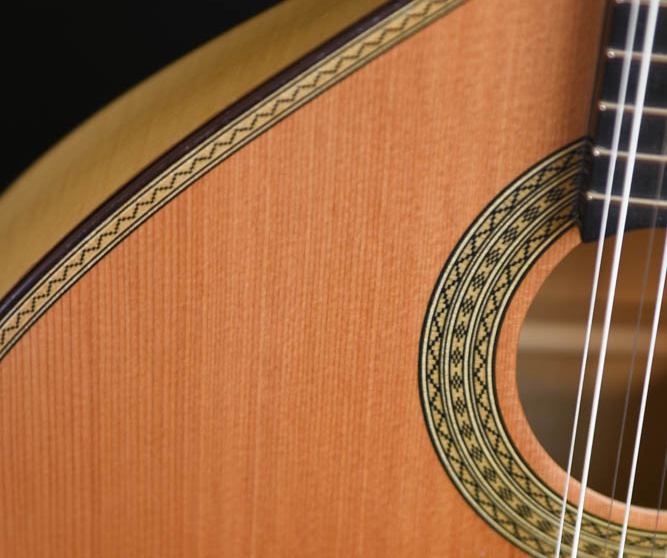
This instrument arose from the desire to expand the range of the Portuguese guitar, offering a lower voice that could complement and enrich musical arrangements, especially in the context of instrumental fado and Portuguese chamber music. The Baritone has a larger soundbox, a longer scale, and is tuned an octave below the traditional guitar, giving it a distinct sonic presence.
With six pairs of strings (double strings), just like the Portuguese guitar, the Baritone maintains the same relative tuning, allowing experienced guitarists to adapt quickly to its playing. Despite its physical impressiveness, the Baritone is versatile and can be used both as a solo instrument and as accompaniment in instrumental ensembles.
The Baritone is still a rare and little-known instrument, mainly used by musicians seeking new timbral possibilities within the Portuguese musical tradition. However, it has been gaining attention in academic circles and among performers dedicated to traditional and contemporary Portuguese music.
Main Characteristics:
- Larger size than the traditional Portuguese guitar.
- Deeper and fuller sound, often described as more "orchestral."
- Six courses of strings, like the Portuguese guitar.
- Used especially in fado contexts, but also in modern and instrumental performances.