

Craviola
Brazilian Invention with a Unique Timbre
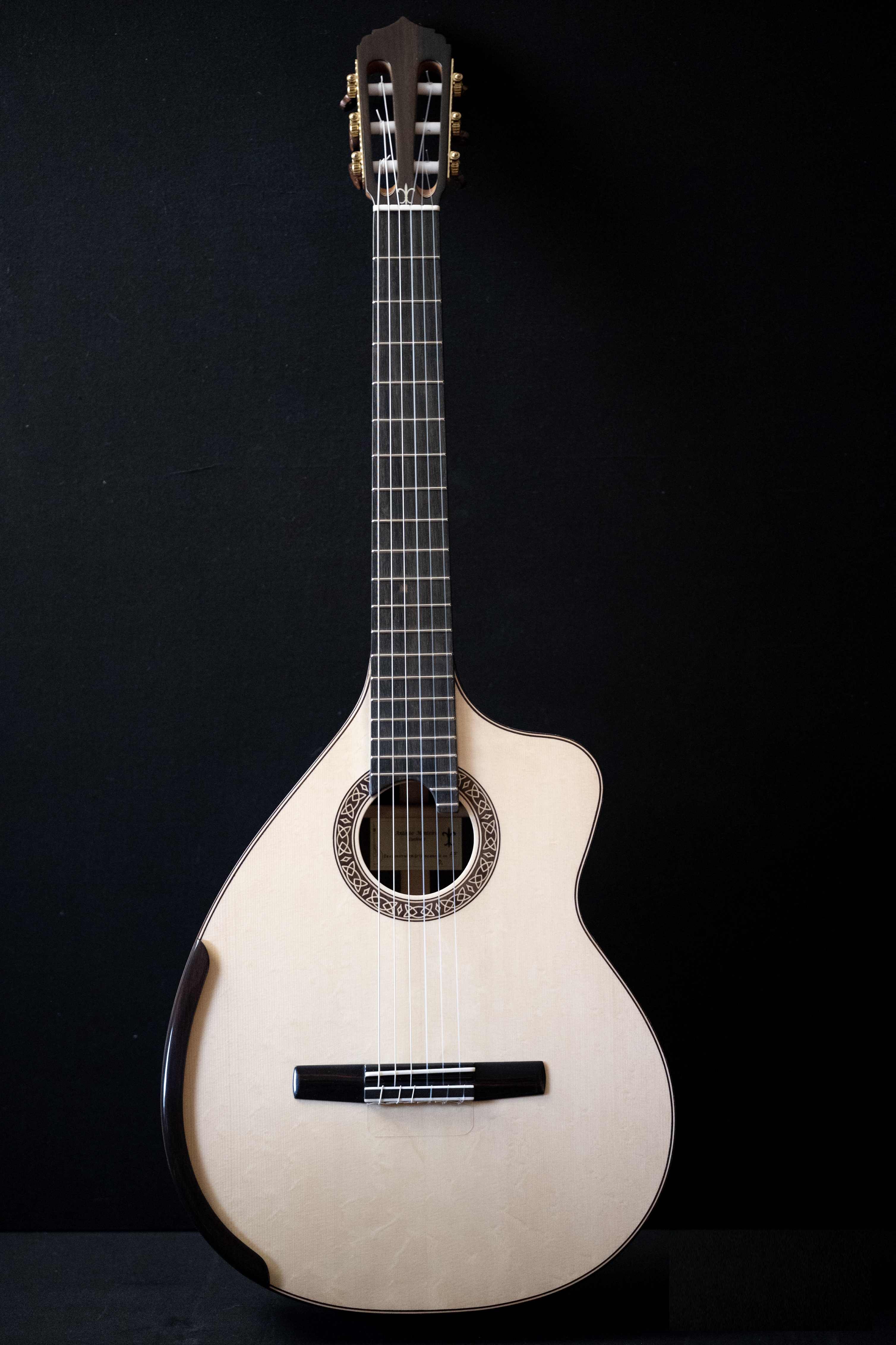
The Craviola is a Brazilian musical instrument that combines characteristics of the harpsichord and the viola, resulting in a unique timbre and an unmistakable visual appearance. Created in the 1960s, it became a symbol of innovation within Brazilian popular music, both for its sound and its asymmetrical design.
Origin and Creation
The Craviola was conceived by musician and composer Paulinho Nogueira, one of the great names in Brazilian guitar, in partnership with Giannini, a traditional string instrument manufacturer. The goal was to create an instrument with a unique sound and striking appearance, offering an alternative to the traditional guitar.
The name “Craviola” comes from the fusion of “cravo” (harpsichord, a Baroque-era keyboard instrument with metallic and percussive sound) and “viola” (a popular string instrument typical of the Brazilian countryside). The Craviola is not a literal combination of these instruments but an evocation of a hybrid timbre: bright, sweet, with a slight metallic resonance.
Physical Characteristics
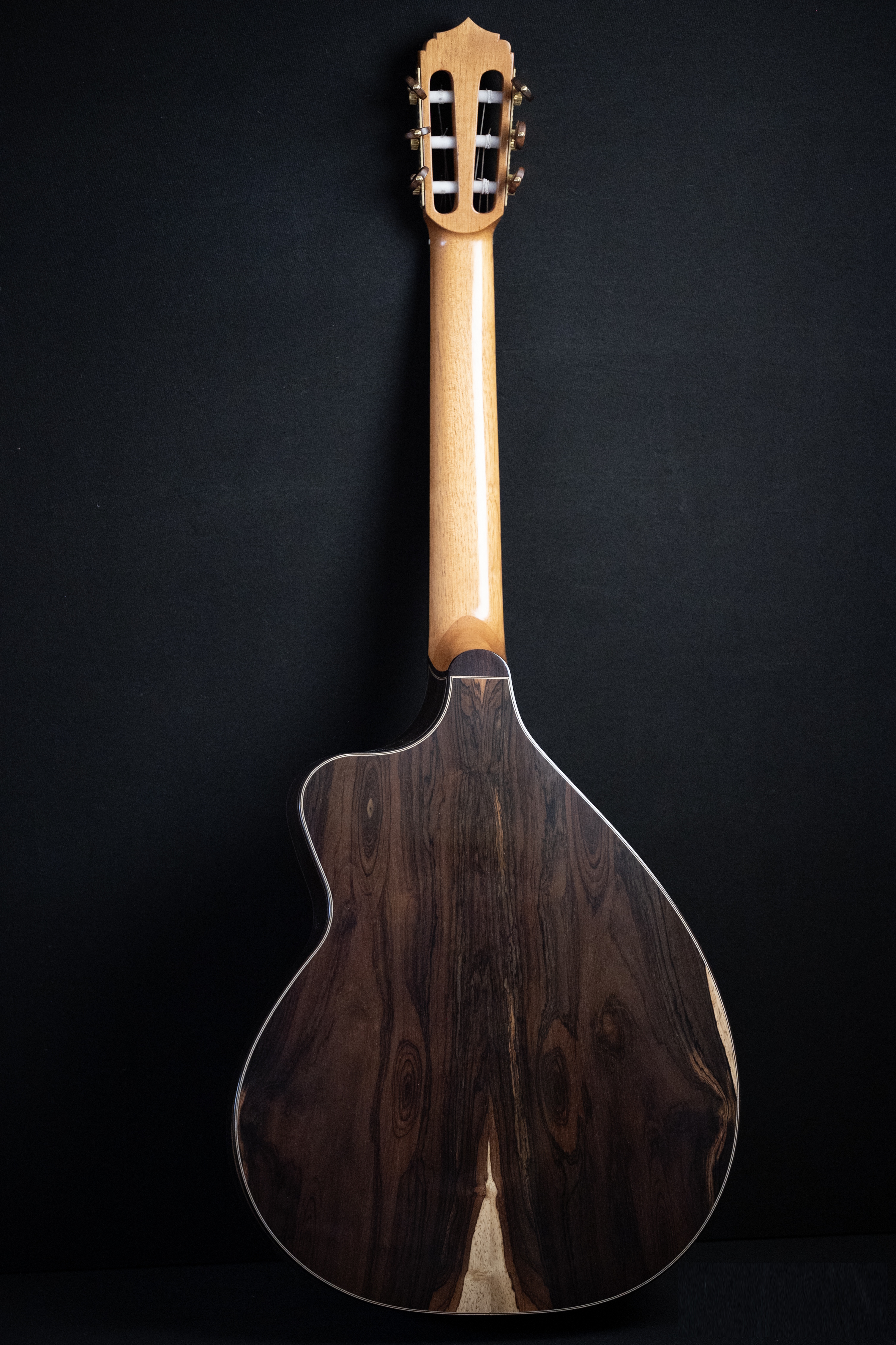
The most distinctive feature of the Craviola is its asymmetrical and curvilinear shape, with a body that resembles a drop or a wing. This design directly influences sound projection and resonance, providing a well-balanced tone between bass and treble with excellent sustain.
It can be found in versions with:
- 6 strings (similar to a guitar);
- 12 strings (closer to a viola caipira or 12-string guitar);
- And even electric versions, used by musicians across different styles.
The top is usually made of spruce or cedar, while the back and sides are made from woods such as mahogany, rosewood, or pau ferro. The Craviola can be acoustic or electro-acoustic, which further increases its versatility.
Sound
The Craviola’s sound is its greatest attraction: rich, full-bodied, with brightness in the treble and warmth in the bass, vaguely reminiscent of a harpsichord in the note attack, but with the softness of a plucked viola. It is widely used for harmonic accompaniment but also stands out in melodic lines and instrumental arrangements.
The 12-string model provides a natural “chorus” effect due to the doubling of the strings, adding texture and depth to the sound.
Applications and Cultural Relevance
The Craviola gained popularity not only in Brazil but also internationally. British musician Jimmy Page, of the band Led Zeppelin, used a 12-string Giannini Craviola in recordings, helping to spread the instrument beyond Brazil.
Within Brazil, the Craviola is present in popular music, MPB, folk, instrumental, and regional styles, valued by musicians seeking an original sound rooted in Brazilian culture.
The Craviola is an example of how invention and national identity can merge into a unique instrument that honors traditions without ceasing to innovate. With its enchanting sound and bold design, it has won over demanding musicians passionate about the distinctive timbre only it can offer. A true icon of Brazilian musical creativity.