
Oporto Portuguese Guitar
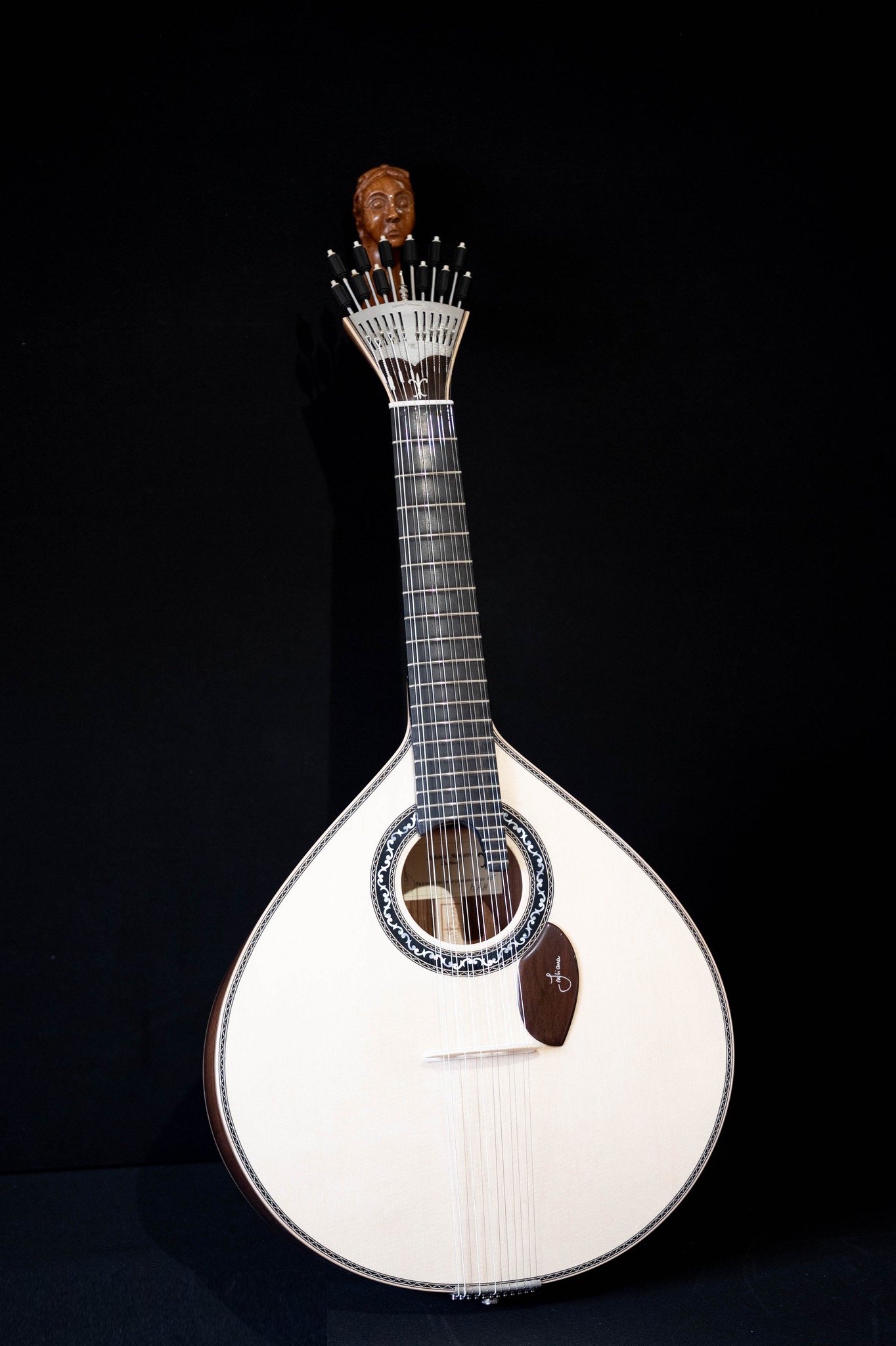
Oporto Portuguese Guitar, although less publicized and standardized than the Lisbon and Coimbra variants, represents a unique and regional expression of the instrument within the Portuguese musical universe. Its presence is associated with local ways of playing fado and other musical traditions from northern Portugal, reflecting a rich and diverse cultural heritage.
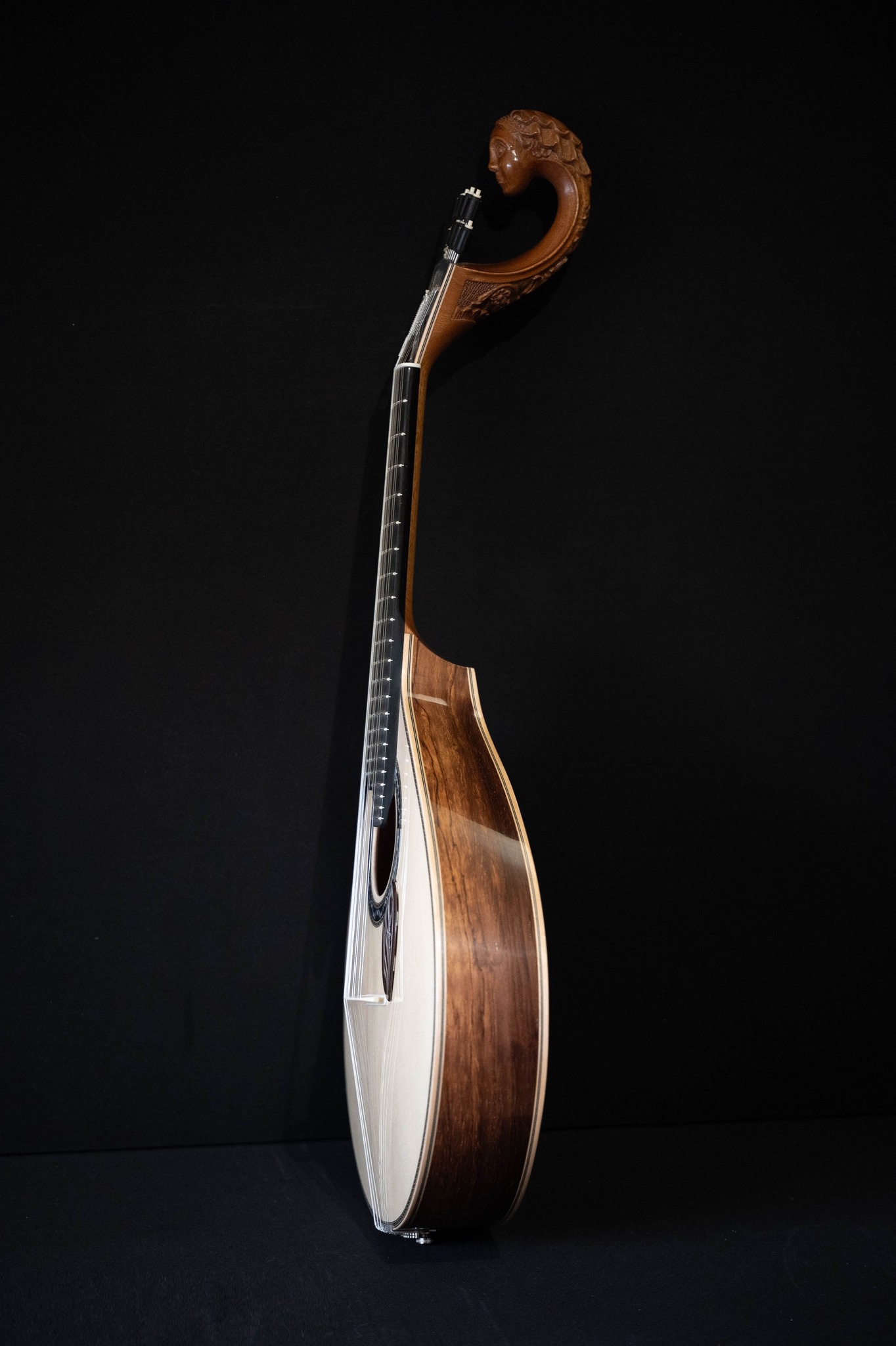
From a construction standpoint, the Oporto guitar is generally considered a hybrid variant. It features elements that resemble both the Lisbon and Coimbra guitars, varying according to the luthier and musician. Some versions have a body similar to Lisbon’s, but with tuning or neck closer to Coimbra models. This flexibility results in a balanced sound, neither as bright as the Lisbon guitar nor as deep as the Coimbra one, with a unique timbre that appeals to musicians seeking versatility.
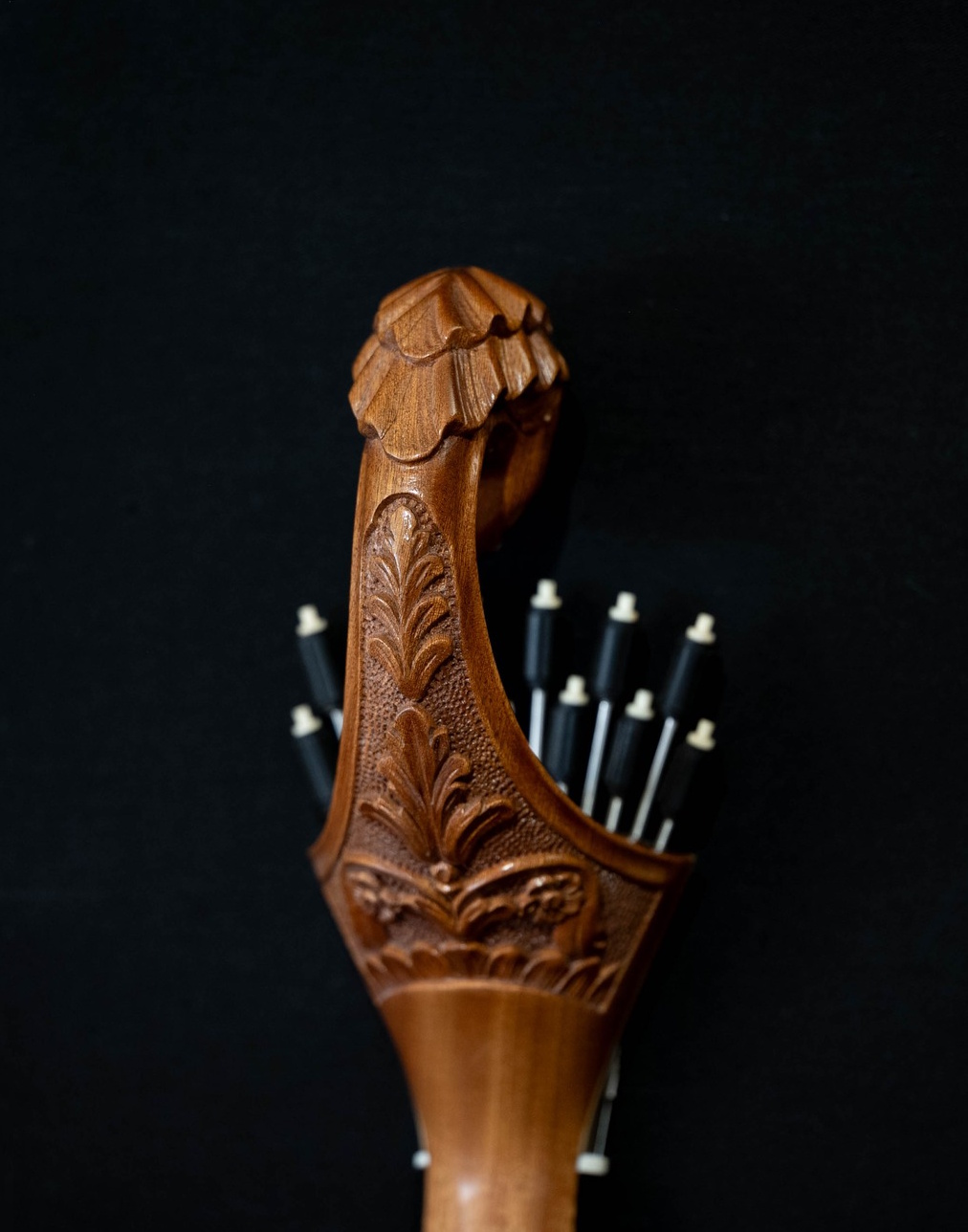
The tuning of the Oporto guitar is not fully standardized, and may follow Lisbon’s tuning (in D) or Coimbra’s tuning (in C), depending on the repertoire and the guitarist’s preference. The shape of the instrument’s headstock also varies, sometimes decorated simply, reflecting a more discreet and functional aesthetic.
Historically, the city of Oporto had a less institutionalized fado scene than Lisbon or Coimbra, but with its own traditions of serenades, bohemian gatherings, and cultural circles where the Portuguese guitar found space and expression. In recent years, there has been an effort to value and reinterpret the Porto guitar, with local musicians and makers reclaiming this unique instrumental identity.
Thus, the Oporto Portuguese Guitar is both a bridge between traditions and a regional affirmation, offering a sonic and stylistic alternative within the rich tapestry of Portuguese fado.