
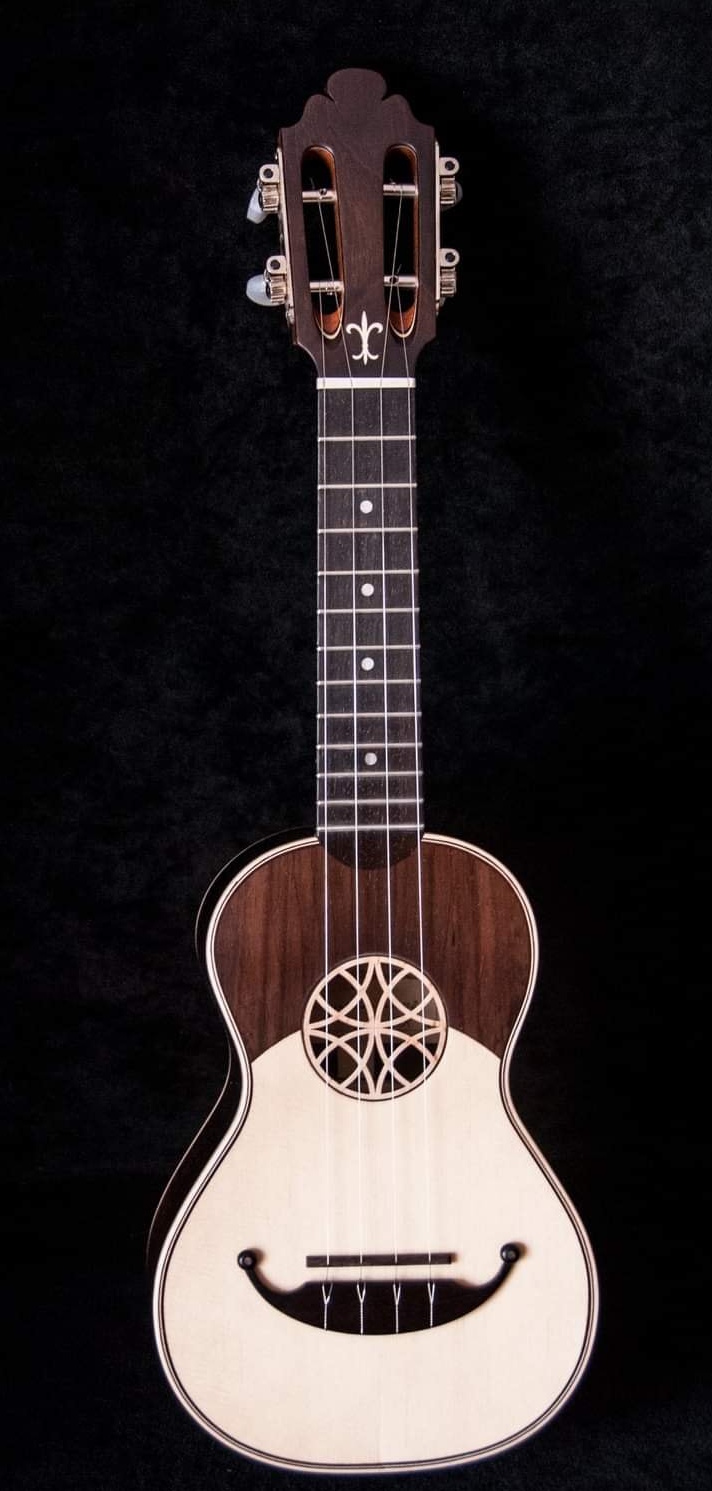
Portuguese Cavaquinho
The String Instrument with a Popular Soul
The Portuguese cavaquinho is a traditional string instrument that holds a special place in Portugal’s popular music. Small in size, with a lively and penetrating sound, the cavaquinho has played an important role in various musical genres, from Minho folklore to Coimbra’s fado.
Characteristics:
- The cavaquinho usually has four metal strings, traditionally tuned to D-G-B-D, although there are other regional tunings.
- Its construction resembles a small guitar, with a figure-eight shaped body (similar to a guitar), a wooden soundboard, and a short neck.
- It generally measures about 50 to 60 cm in length.
History and Spread:
The cavaquinho dates back to the 19th century (or earlier) and developed especially in the Minho and Trás-os-Montes regions. Its simplicity and portability made it a popular instrument among peasants and traveling musicians.Thanks to Portuguese navigation, the cavaquinho was carried to other parts of the world, directly influencing the creation of instruments such as:
- the ukulele in Hawaii,
- the Brazilian cavaquinho, which became essential in samba and choro,
- and the braguinha in Madeira.
Role in Portuguese Music:
In Portugal, the cavaquinho is often used in traditional music, especially in Minho’s rusgas and folk dances. In Portuguese popular music groups, it is commonly accompanied by the viola braguesa, reco-reco, and concertina.In recent years, it has also been gaining space in contemporary music, thanks to its versatility, cheerful timbre, and ease of transport.