
The Portuguese Guitar of Lisbon
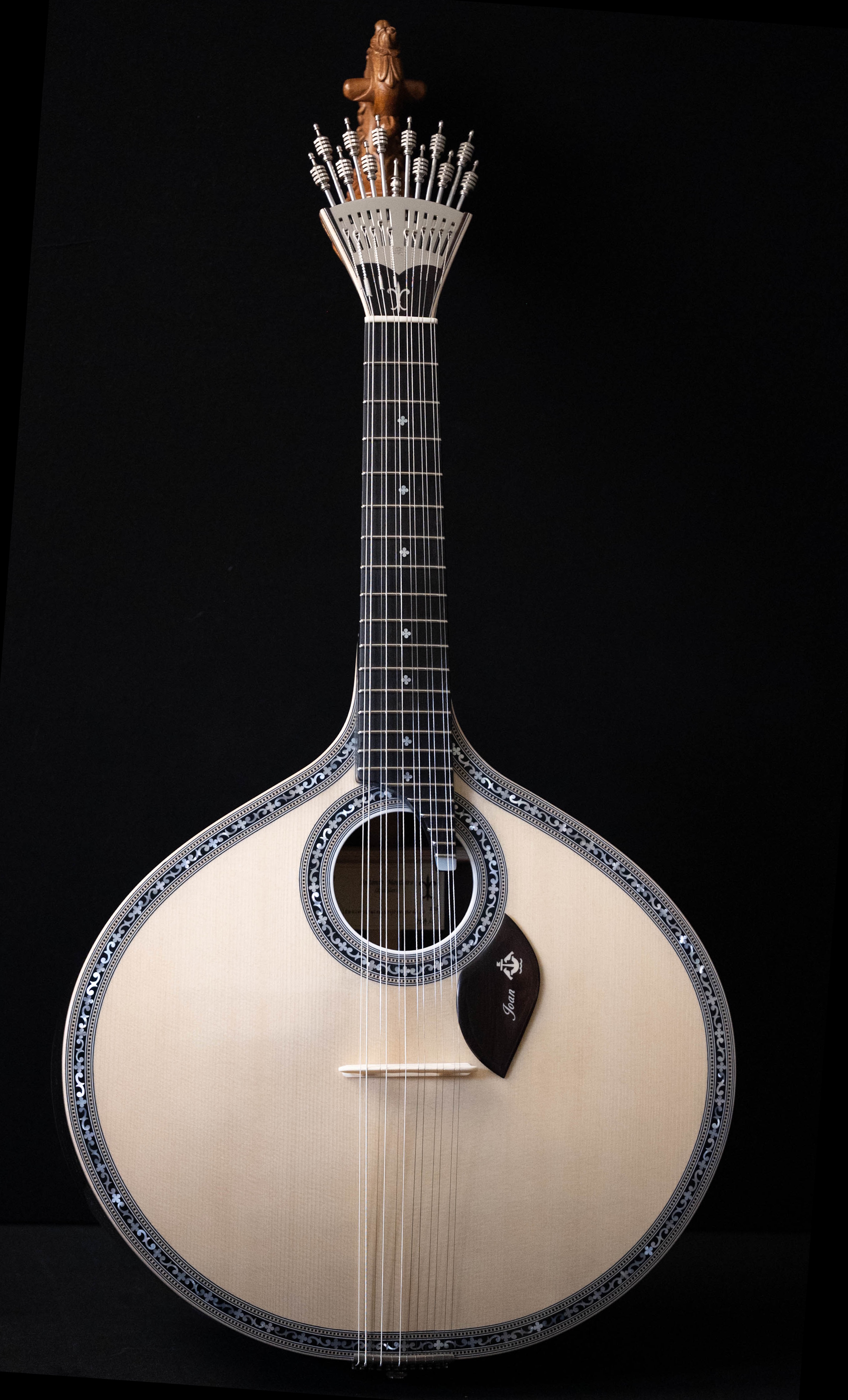
The Portuguese guitar of Lisbon is one of the most characteristic instruments of traditional Portuguese music, being essential in accompanying Lisbon Fado. With a bright, vibrant, and shimmering sound, this guitar plays a central role in creating the emotional and intense atmosphere that characterizes the capital’s Fado.
Structurally, the Lisbon guitar has a more rounded and compact soundbox compared to the Coimbra version. The neck is slightly shorter, and the traditionally used tuning is in D, resulting in a brighter and more penetrating tone. The headstock of the Lisbon guitar usually features a spiral or volute shape, with a more elaborate decorative finish, reflecting the more expressive and urban spirit of the city.
Technically, the Lisbon guitar allows great freedom of melodic ornamentation, with frequent use of trills, arpeggios, and virtuosic fingerpicking. It is played with artificial nails applied to the thumb and index finger, which contributes to the clarity and intensity of the sound.
Accompanying male or female voices, the Lisbon guitar acts as both accomplice and commentator of the fadista’s emotion, dialoguing freely and improvisationally with the voice, in a style that values both technique and expressiveness.
More than just an accompanying instrument, the Portuguese guitar of Lisbon is an emotional extension of the fadista and a sonic symbol of Lisbon’s soul—nostalgic, passionate, and deeply human.