
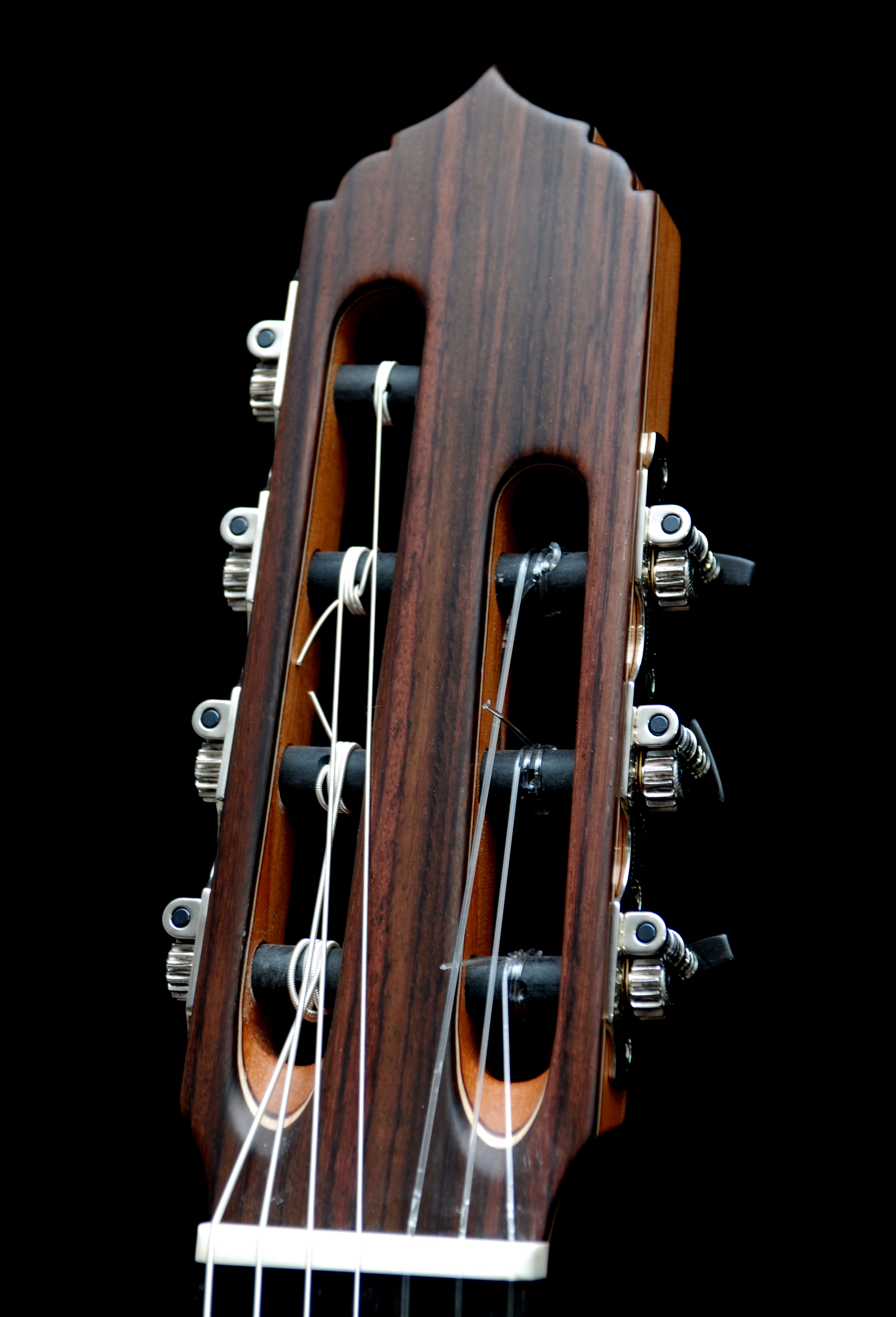
Seven-String Classical Guitar
Sound Expansion and Harmonic Richness
The seven-string classical guitar is a direct evolution of the traditional classical guitar, expanding the technical and musical possibilities of the instrument. With an additional string in the lower register, this variant offers greater sonic depth, harmonic flexibility, and a wider range of artistic expressions. Although less common than the six-string version, the seven-string guitar has gained space in various musical styles, from classical repertoire to popular music.
Origin and Development
The seven-string guitar has historical roots in several cultures. In 19th-century Europe, versions with seven or more strings were already used in romantic repertoires. However, it was in Brazilian popular music, especially in choro and samba, that the seven-string guitar (or violão) became established as a fundamental instrument. In the classical context, modern composers and performers began adopting it to explore new compositional possibilities and adapt works originally written for instruments with a wider range, such as piano or lute.
Technical Characteristics
The main difference of the seven-string guitar is the addition of a lower string, usually tuned to B below the sixth string’s E. However, it is also common to tune it to C or even D, depending on the style or desired arrangement. The standard tuning is therefore: B–E–A–D–G–B–E, from the seventh to the first string.This extra string allows the musician to:
- Play more complex and independent bass lines;
- Enrich the harmony with additional low voices;
- Perform denser and fuller arrangements;
- Expand the repertoire to pieces originally written for lower-pitched instruments.
From a construction standpoint, the seven-string guitar maintains the proportions of the traditional classical guitar but requires adjustments to the neck (wider) and the bridge to accommodate the extra string. The woods used follow the same quality criteria as classical construction, prioritizing tone, resonance, and balance.
Musical Applications
The seven-string classical guitar is used in diverse contexts. In Brazil, it is essential in choro, where the guitarist leads bass lines with great rhythmic freedom. In contemporary classical music, composers like Raphael Rabello and classical performers have expanded its use in transcriptions of Baroque, Romantic, and modern works. The instrument also attracts jazz, flamenco, and experimental musicians, who find in the seventh string a new sonic dimension.The seven-string classical guitar is more than a physical extension of the instrument: it is an open door to new musical landscapes. With its tonal depth and harmonic versatility, it offers the performer a powerful means of expression, whether on a concert stage, in a choro circle, or in the composition of new sonic languages.