
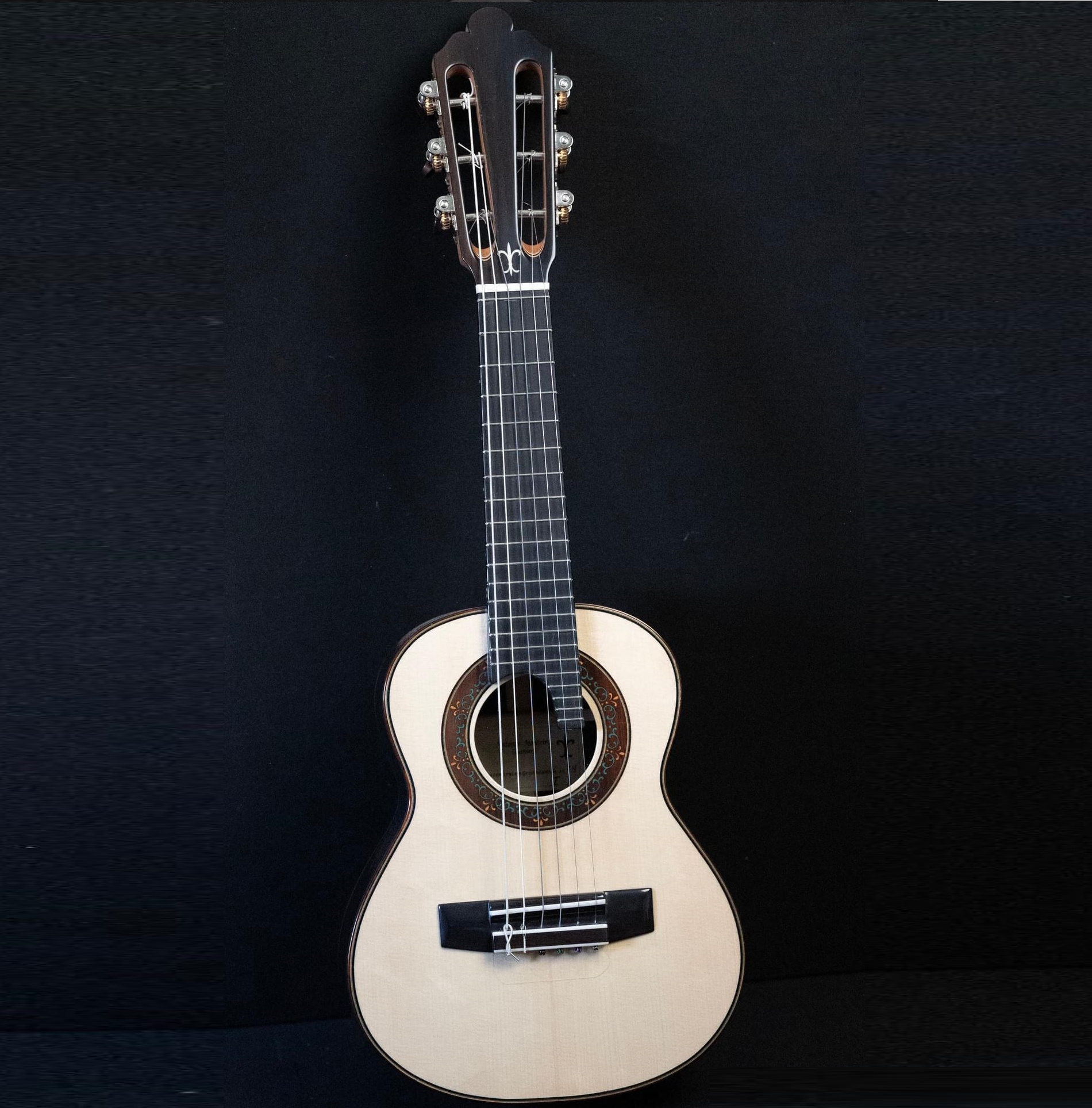


Brazilian Cavaquinho
The Rhythmic Soul of Samba
The Brazilian cavaquinho is a string instrument widely present in Brazil’s popular music, especially in genres such as samba, choro, and pagode. Small in size but huge in cultural importance, it is considered one of the core sounds of Brazilian musical identity.
Characteristics:
- It has four strings, usually steel, and a traditional tuning of D-G-B-D, although the tuning D-G-B-E (like the first four strings of a guitar) is also used.
- Its body resembles a miniature guitar, with a wooden soundbox and a short neck.
- It is played with a pick (plectrum), producing a percussive and rhythmic sound, very characteristic in samba circles.
Origin and Evolution:
The cavaquinho arrived in Brazil through Portuguese colonizers, especially influenced by the Minho cavaquinho and the Madeira braguinha. In Brazil, it gained its own shape and began to be used in distinct ways, with more rhythmic and harmonic playing techniques.Over time, musicians like Waldir Azevedo, Canhoto, Mestre Siqueira, and many others contributed to elevating the cavaquinho as both a solo and accompanying instrument, highlighting its expressiveness and versatility.
Role in Brazilian Music:
In choro music, the cavaquinho plays both harmonic accompaniment and soloist roles. In samba and pagode, it is the "backbone" of the rhythm, performing the "corte" — a type of syncopated beat that marks the time and brings the music to life.Today, the Brazilian cavaquinho is a symbol of roots music and the contagious joy of samba circles, present in festivals, recordings, and in the hands of musicians of all ages.