
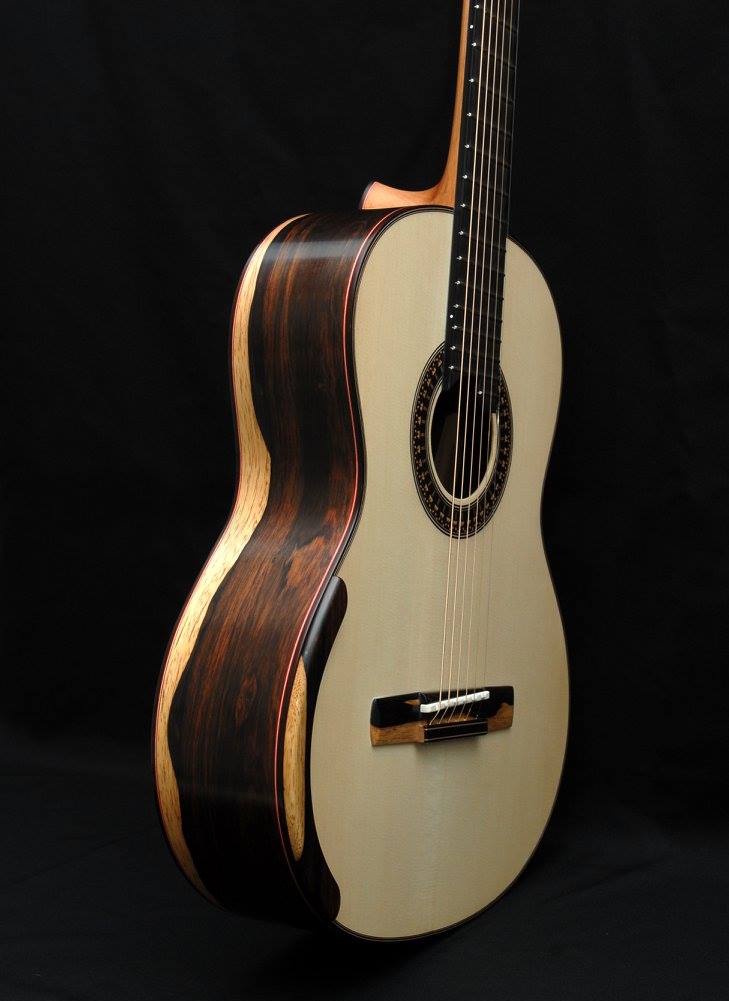
Fado Accompaniment Guitars
The Harmonic Soul of Fado
The fado accompaniment guitar, also known simply as the guitar or acoustic guitar, is one of the pillars of accompaniment in fado, a musical genre deeply rooted in the Portuguese soul. Although often overshadowed by the expressive brilliance of the Portuguese guitar, the fado guitar plays an essential role: providing harmonic and rhythmic support, creating the foundation upon which the voice and Portuguese guitar embellish.
Role in Fado
In the context of fado, the guitar is not a melodic highlight, but rather the solid foundation that gives body and stability to the performance. Its role is to establish chord harmony, the pulse of the rhythm, and the emotional cadence of the song. Without the guitar, fado would lose its grounding, its “marked beat,” and much of its expressive depth.
Technical Characteristics
The fado guitar is a variant of the six-string classical guitar, but with specific adaptations to the fado style, both in playing technique and construction:- Steel or bronze strings, instead of the classical guitar’s traditional nylon strings, give it a more metallic and percussive sound, with greater projection.
- The soundboard is usually made of spruce or cedar, while the back and sides may be crafted from mahogany, rosewood, or other fine woods.
- The neck is slightly narrower, and the bridge is reinforced to withstand the higher tension of metal strings.
- The tuning follows the traditional guitar tuning: E–A–D–G–B–E, but the stringing and fingerpicking techniques are distinct, adapted to the phrasing and rhythm of fado.
Technique and Style of Performance
The fado guitarist develops a very particular technique, often using rhythmic strumming with the thumb, dry attacks on the bass strings, and alternating between gentle fingerpicking and pronounced accents. All of this enhances the emotion of the singer (or solo Portuguese guitar), without ever overshadowing them.Unlike other musical traditions where the guitar may take center stage, in fado, the guitar is the silent companion, knowing when to be heard and, above all, when to remain silent.
Fado Guitar in Lisbon and Coimbra
In Lisbon's fado tradition, the guitar has a more prominent and rhythmic presence, contributing to the music’s liveliness and swing. In Coimbra fado, the guitar playing tends to be more discreet and gentle, matching the more lyrical and introspective character of that style. In both cases, the player must possess a refined sense of dynamics, timing, and interpretive sensitivity.The Portuguese fado guitar is an instrument of discretion and nobility, whose importance lies in the firm foundation it provides for fado’s emotions. It supports the singer, offers fertile ground for the Portuguese guitar, and brings balance to the music. Though often kept in the background, the guitar is, without a doubt, the harmonic soul of fado.