
The Portuguese Guitar
Three Voices of the Same Soul
The Portuguese guitar is one of the most distinctive symbols of Portugal's musical identity, deeply connected to fado and the emotional expression of the Portuguese people. With its characteristic shape, a rounded body and twelve strings arranged in six double courses, the Portuguese guitar is not just an instrument but an extension of the national soul. Over time, it developed into three main variants — Lisbon, Coimbra, and Porto — each with its own features, reflecting different cultural and sonic traditions.
Lisbon Guitar
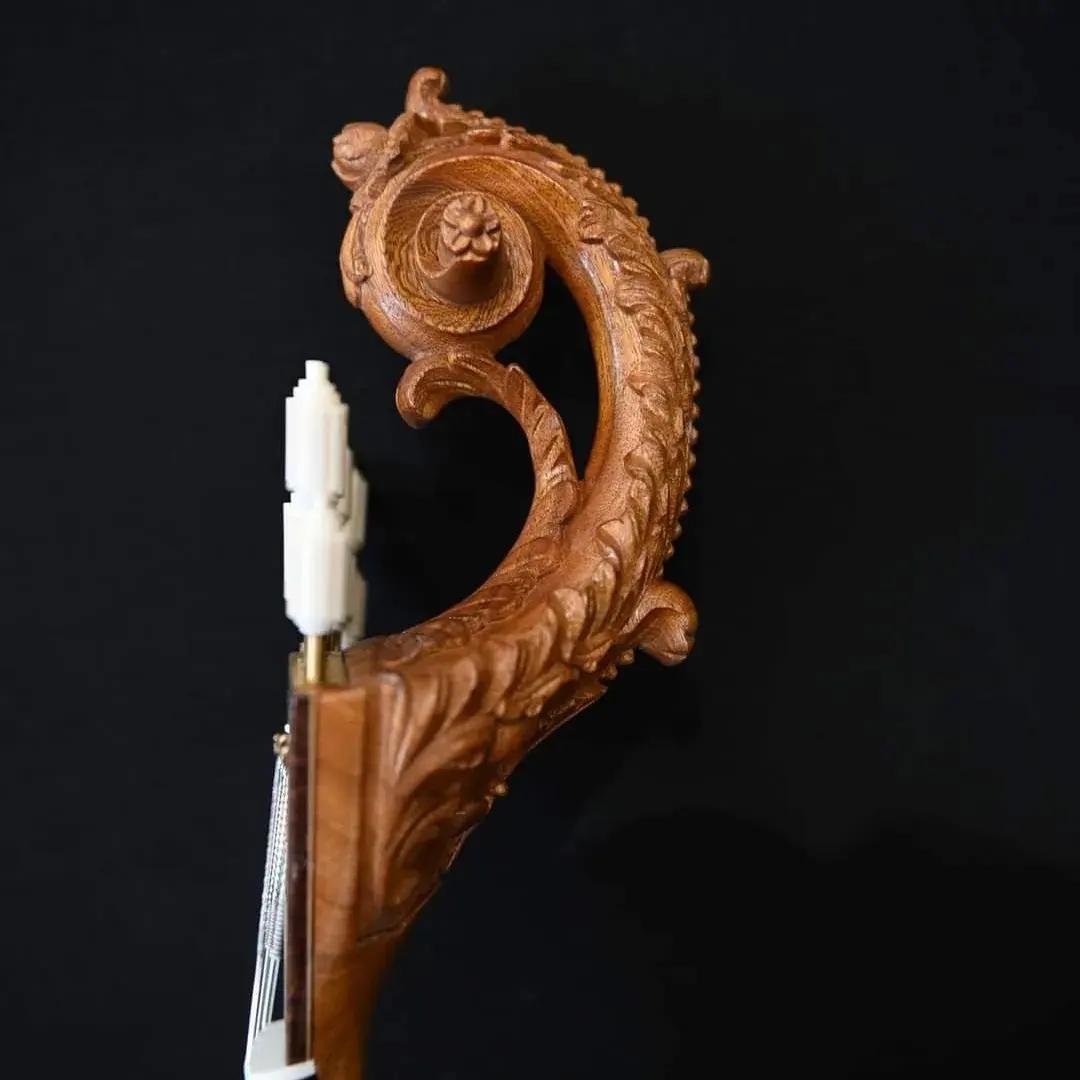
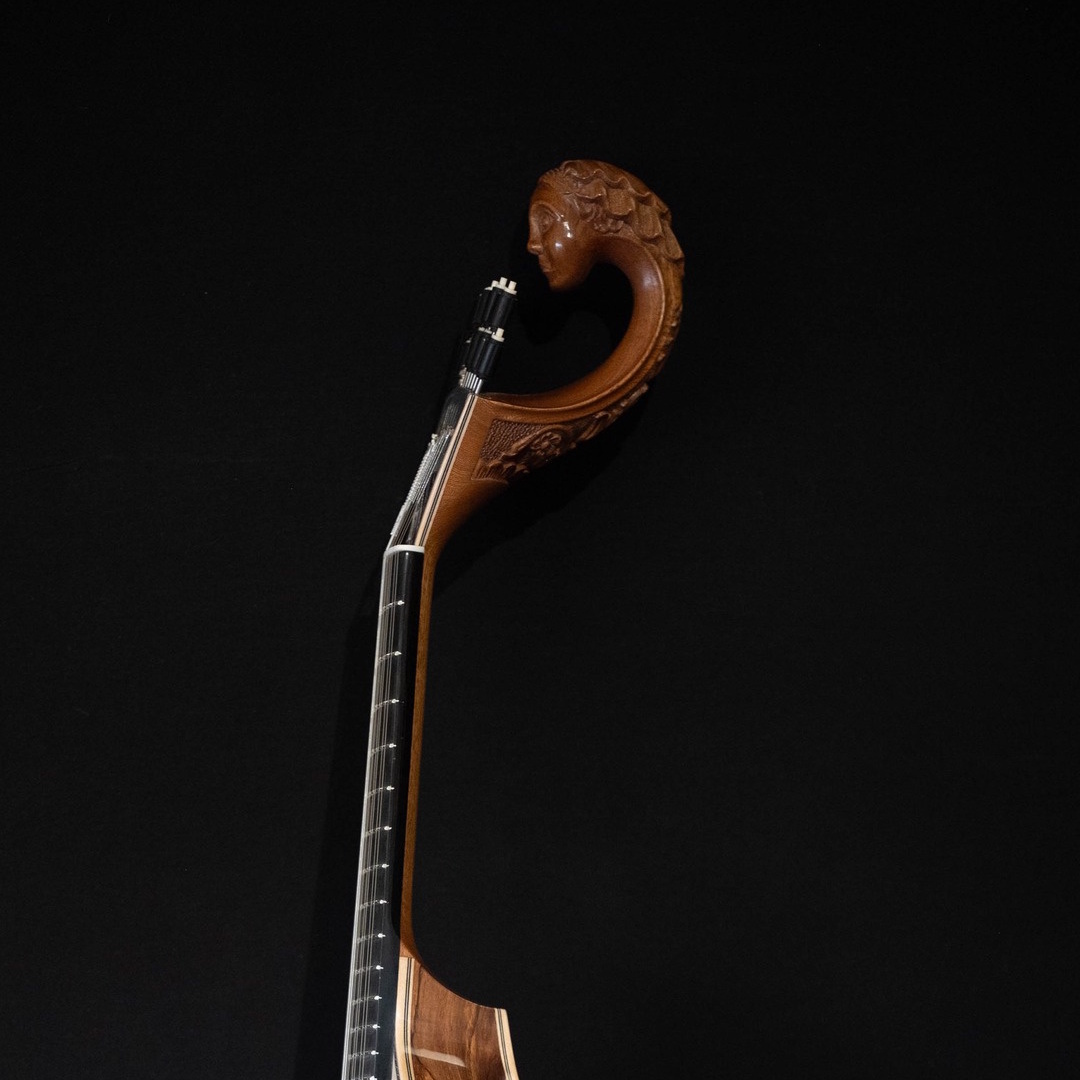
The best-known and most widespread version of the Portuguese guitar is the Lisbon one, associated with traditional fado sung in the historic neighborhoods of the capital, such as Alfama, Mouraria, and Bairro Alto. The Lisbon guitar stands out for its sharp, bright, and penetrating sound, with a traditional tuning in D. Its body is more compact and rounded, and the headstock typically has a snail-shaped (volute) design, with elaborate decoration. It is frequently used to accompany fadistas, engaging in expressive dialogue with the voice through great freedom of expression and technical ornamentation.
Coimbra Guitar
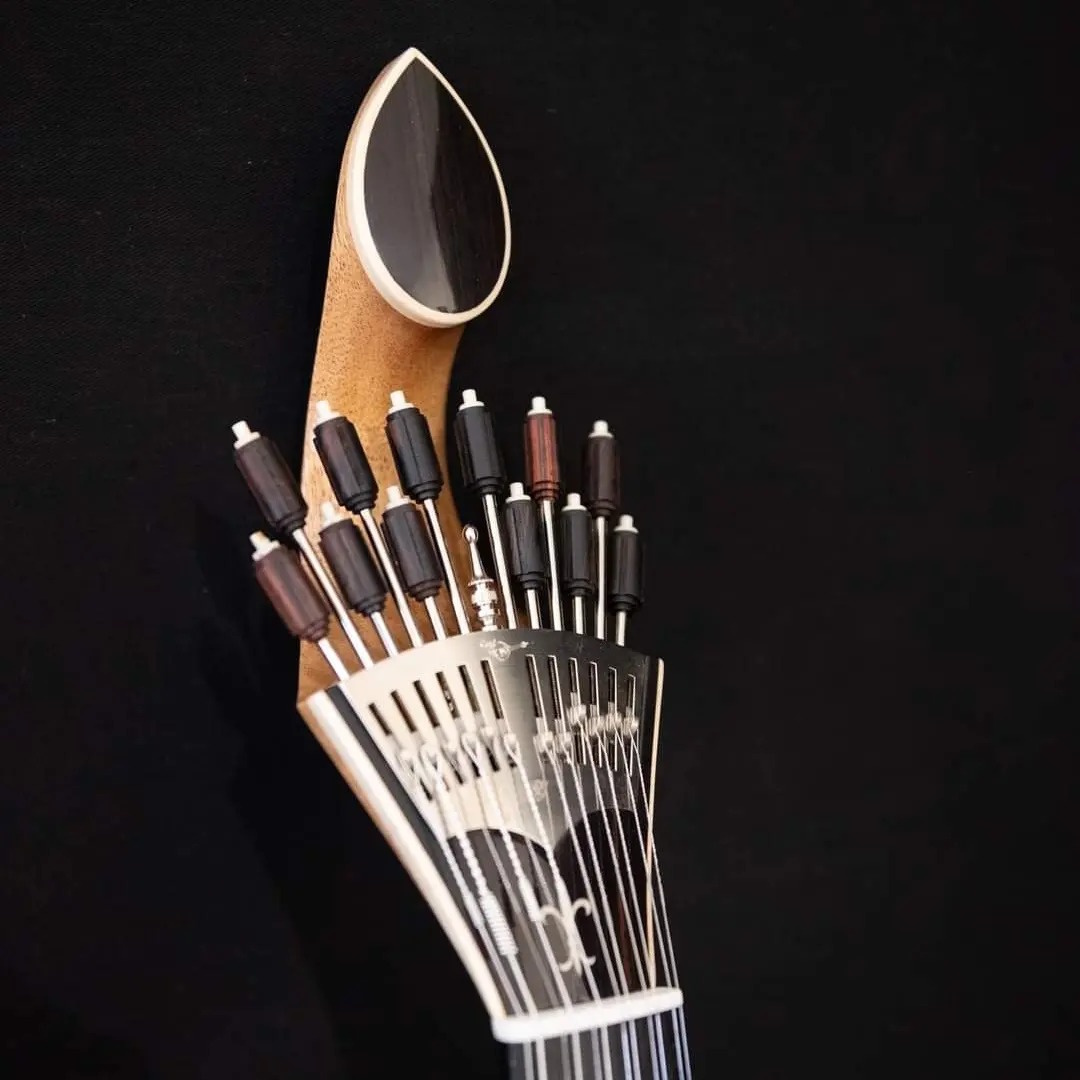
The Coimbra guitar, in turn, is deeply linked to academic fado and the university tradition of the city. Slightly larger in size, with a narrower soundbox and longer neck, the Coimbra guitar is tuned lower, generally in C, which gives it a deeper, more introspective, and melancholic sound. The headstock often takes the shape of a teardrop or shield, symbolizing its connection to the academy. It is usually played in serenades and reflective contexts, with a more restrained and poetic style, reflecting Coimbra’s student and bohemian spirit.
Porto Guitar
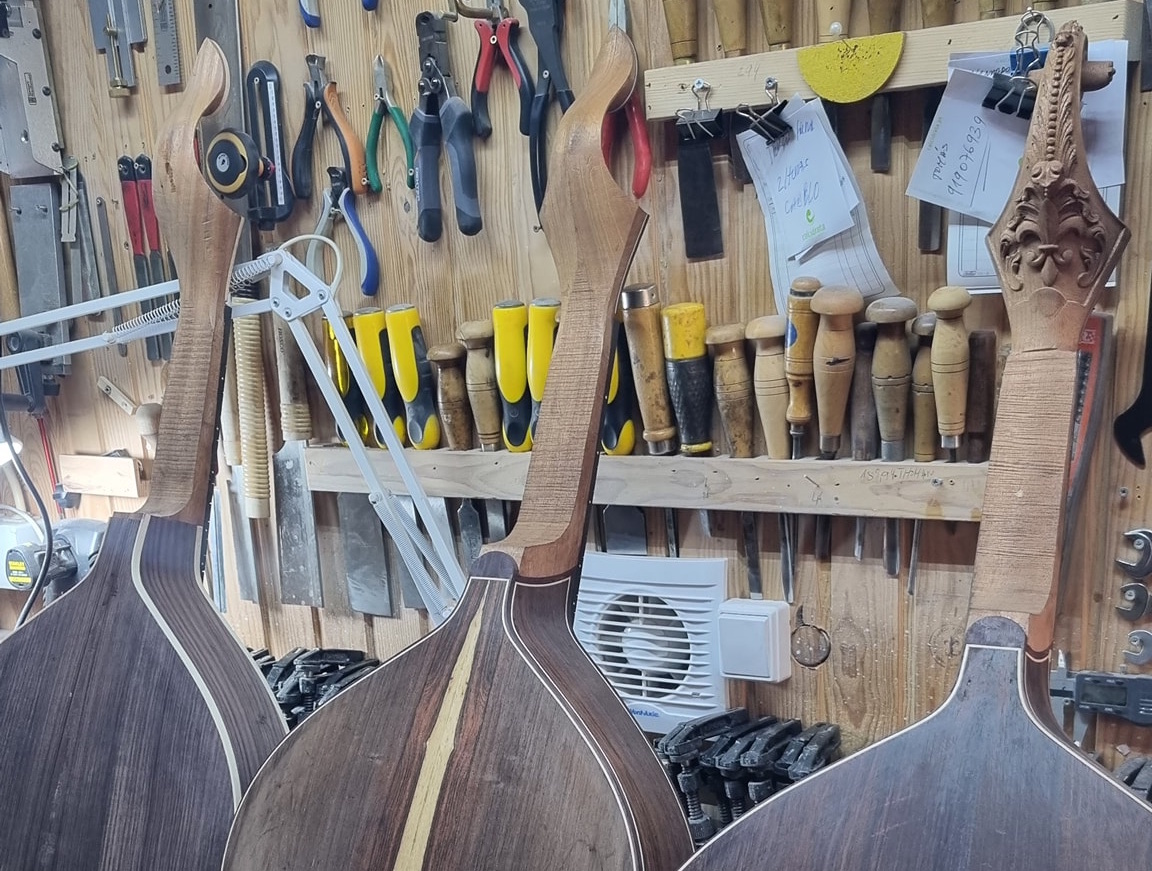
Less known but equally significant is the Portuguese guitar from Porto. This variant does not have a standardized technical model like Lisbon and Coimbra guitars, functioning either as a synthesis of both or as its own regional expression. Sonically, it occupies a middle ground between the brightness of Lisbon and the depth of Coimbra, and can be tuned in different ways depending on the musician’s preference. The Porto guitar reflects the rich cultural heritage of Northern Portugal and has gained new momentum in recent years, with musicians and luthiers reclaiming its local identity.